How to Navigate and Thrive in The Industrial Revolution 4.0 in the Digital Era


Welcome, fellow voyager, to an exhilarating journey into the heart of the most transformative era humanity has ever witnessed. We stand at the precipice of a new dawn, where the lines between the physical, digital, and biological worlds blur with astonishing speed. This guide isn't just a roadmap; it's an invitation to understand, adapt, and ultimately thrive within The Industrial Revolution 4.0 in the Digital Era. We will dissect its core components, explore its profound impacts, and equip you with the foresight needed to harness its immense power, rather than be overwhelmed by its currents.
Table of Contents
- Table of Contents
- Step 1: Unveiling the Genesis – Understanding the Core Pillars of Industry 4.0
- Step 2: The Digital Thread – Weaving Technologies into a Seamless Ecosystem
- Step 3: Reshaping Industries – The Impact on Business Models and Operations
- Step 4: The Human Element – Upskilling, Reskilling, and the Future of Work
- Step 5: Charting the Course – Strategies for Businesses and Individuals to Adapt and Innovate
- Step 6: Beyond the Hype – Addressing Challenges and Ensuring a Sustainable Future
- Conclusion
Table of Contents
- Step 1: Unveiling the Genesis – Understanding the Core Pillars of Industry 4.0
- Step 2: The Digital Thread – Weaving Technologies into a Seamless Ecosystem
- Step 3: Reshaping Industries – The Impact on Business Models and Operations
- Step 4: The Human Element – Upskilling, Reskilling, and the Future of Work
- Step 5: Charting the Course – Strategies for Businesses and Individuals to Adapt and Innovate
- Step 6: Beyond the Hype – Addressing Challenges and Ensuring a Sustainable Future
Step 1: Unveiling the Genesis – Understanding the Core Pillars of Industry 4.0
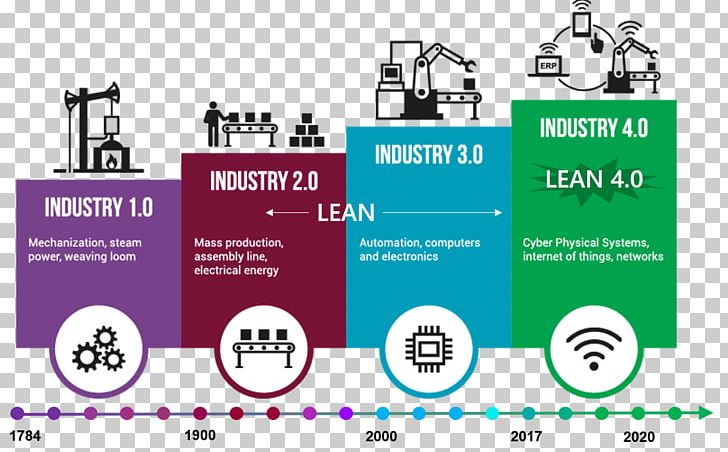
Industry 4.0 represents a profound paradigm shift, fusing technologies that blur the lines between physical, digital, and biological spheres. It’s a re-imagining of how we create, operate, and interact, building on past industrial revolutions of steam, electricity, and automation.
It stems from interconnected technological breakthroughs. The Internet of Things (IoT) forms a vast network of physical objects embedded with sensors and software, exchanging data over the internet. Think smart factories optimizing production or cities managing traffic. This interconnectedness generates Big Data, whose collection, processing, and analysis yield unprecedented insights for prediction, personalization, and efficiency.
To harness this data, Artificial Intelligence (AI) and Machine Learning (ML) empower systems to learn, identify patterns, make decisions, and perform complex tasks. These are complemented by advanced robotics, including collaborative robots (cobots) that augment human capabilities. Cloud computing provides scalable infrastructure for data storage and processing, while additive manufacturing (3D printing) enables on-demand, customized production. Their true power emerges from convergence and interoperability. Grasping these core pillars—IoT, Big Data, AI/ML, Robotics, Cloud, Additive Manufacturing—is vital for navigating this transforming world.
Step 2: The Digital Thread – Weaving Technologies into a Seamless Ecosystem
Industry 4.0's power lies not in individual technologies, but their seamless integration, forming a cohesive, intelligent ecosystem. This is 'the digital thread' – an unbroken, real-time flow of data across the entire value chain, from design to service. It acts as a central nervous system, enabling agile responses and continuous self-optimization.
Consider a manufacturing plant transformed: AI orders raw materials based on predictive demand; robots handle components; sensors monitor machinery, sending data to a cloud platform. ML algorithms analyze this data to anticipate malfunctions, scheduling preventive maintenance. This intelligent automation means systems learn, adapt, and make autonomous decisions, shifting to flexible, personalized manufacturing.
The digital thread extends further to smart supply chains (blockchain, IoT), personalized retail (AI), and advanced healthcare (connected devices, AI for medicine/monitoring). Products become 'smart,' self-diagnosing and sending performance data. Services anticipate needs. This interconnectedness fosters unprecedented efficiency and innovation.
💡 Pro Tip: Prioritize interoperability. Use open standards and API-driven architectures to ensure technologies communicate and share insights effectively, avoiding siloed data.
Step 3: Reshaping Industries – The Impact on Business Models and Operations
Industry 4.0 profoundly reshapes industries, forcing businesses to re-evaluate operating principles and revenue streams. It creates new markets and demands a fundamental rethinking of value creation.
Manufacturing shifts from mass production to mass customization, efficiently tailoring products to individual needs. Companies adopt 'servitization,' selling ongoing services and data insights alongside products. An engine manufacturer might sell 'power-by-the-hour,' optimizing performance with real-time data for recurring revenue and stronger customer ties.
Retail leverages AI and AR for personalized experiences. Logistics sees autonomous vehicles and AI-optimized routes boosting efficiency. Healthcare benefits from personalized medicine, remote diagnostics, and AI-assisted drug discovery, with AI potentially flagging issues proactively from wearable device data.
Agility and resilience are prioritized. Businesses adopt modular systems adapting quickly to market changes. Real-time data enables proactive decision-making. Entire business models are disrupted, demanding innovation from established players and empowering startups. Constant vigilance and iteration are essential.
Step 4: The Human Element – Upskilling, Reskilling, and the Future of Work
Amidst technological shifts, the human element remains paramount. Industry 4.0 isn't about human replacement, but redefined, augmented roles, necessitating a profound re-evaluation of skills and work itself.
Repetitive tasks are automated, freeing humans for activities requiring creativity, critical thinking, problem-solving, emotional intelligence, and complex decision-making. The urgent imperative for upskilling and reskilling demands lifelong learning. Individuals need digital literacy, data analysis skills, and understanding of human-machine collaboration. Companies must invest in employee development, fostering continuous learning and adaptation.
Consider a factory worker whose manual assembly is automated. Instead of redundancy, they retrain to program, maintain, or supervise robotic systems, evolving into a higher-value role. A healthcare professional leverages AI for diagnoses, dedicating more time to empathetic patient interaction. This symbiotic relationship, where technology augments human capabilities, defines human-centered Industry 4.0.
However, ethical considerations arise: data privacy, algorithmic bias, the digital divide, and mental well-being impacts. Ensuring technology serves humanity requires ethical AI development and inclusive innovation. The future of work must encompass purpose, meaning, and equitable opportunity.
Step 5: Charting the Course – Strategies for Businesses and Individuals to Adapt and Innovate
Navigating Industry 4.0 demands clear strategies; passivity is no longer an option. Proactive adaptation and continuous innovation are key to thriving.
For businesses, the journey begins with a clear vision and robust digital transformation strategy. This means rethinking processes, structures, and culture, beyond technology adoption. Start with a comprehensive digital audit. Prioritize pilot projects demonstrating tangible value to foster buy-in. Invest in robust cybersecurity. Cultivate innovation, encouraging experimentation and learning from failures. Strategic partnerships can accelerate your journey. Remember, transformation is a marathon, requiring sustained leadership and agile execution.
For individuals, the strategy centers on continuous personal development and a growth mindset. Identify in-demand digital skills: data literacy, coding basics, AI ethics, cloud computing, cybersecurity awareness. Equally crucial are 'human skills' machines cannot replicate: creativity, critical thinking, complex problem-solving, collaboration, emotional intelligence, and adaptability. Actively seek learning opportunities (online courses, certifications, mentorship). Network in emerging fields. Embrace that career paths may not be linear; reinvention is common. The future rewards perpetual students eager to acquire and apply new knowledge.
Step 6: Beyond the Hype – Addressing Challenges and Ensuring a Sustainable Future
While Industry 4.0 promises immense benefits, acknowledging its challenges is crucial. Moving beyond hype requires critical perspective, balancing progress with responsibility, ethics, and a concerted effort for a sustainable, equitable future. True innovation considers both capability and consequence.
Foremost is cybersecurity. As more systems interconnect, the attack surface expands exponentially. A breach in a smart factory or critical infrastructure could have catastrophic consequences. Robust cybersecurity frameworks, continuous monitoring, and training are paramount.
Data privacy and algorithmic bias are critical concerns. With vast data collected, questions arise: ownership, protection, and fairness of AI decisions. Transparency, accountability, and ethical guidelines in AI development are crucial to prevent discrimination and maintain public trust. The digital divide also poses a hurdle; unequal access to tools and education could exacerbate inequalities.
Finally, sustainability must be integral. While smart systems optimize resource usage, data center energy consumption and manufacturing impact require careful consideration. The goal is efficiency guided by ecological responsibility. We must leverage these technologies for renewable energy, circular economies, and climate change solutions. This commitment to an inclusive, sustainable future is foundational for Industry 4.0 to fulfill its potential.
Conclusion
We have journeyed through the intricate landscape of The Industrial Revolution 4.0 in the Digital Era, from its technological foundations to its societal reverberations. We explored the seamless digital thread, witnessed the reshaping of industries, and grappled with the vital human element. You've gained insights into strategies for adapting, innovating, and critically, acknowledging the challenges. This is not a static destination, but an ongoing evolution, inviting us to be active participants. Congratulations on equipping yourself with the knowledge to navigate this thrilling new world. The future is not just arriving; it's being built, byte by byte, by those who dare to understand and engage with its profound possibilities.